
Create Looping Stream Backgrounds for Livestreams Smoothly With AI Video Generator
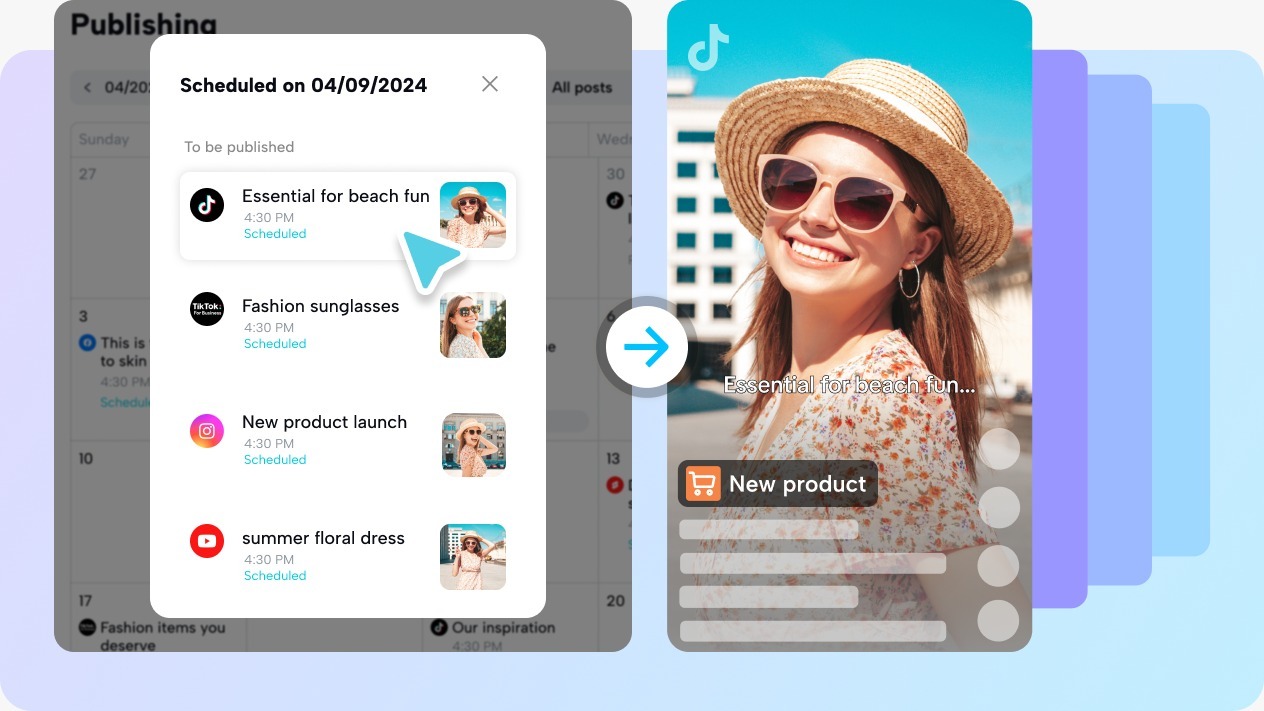
They add a sense of liveliness to static layouts and focus on primary content. The challenge is to balance the movement with readable overlays, cameras, alerts, and chat. Looping video can give the impression of continuous motion without having to repeat playback controls. They can be generated as themed environments by AI based on prompts, reference images, or other media. A planned background can help to reinforce channel identity and remain visually restrained during longer sessions.
What Makes a Stream Background Suitable for Looping?
Stable composition, predictable movement, predictable lighting, and predictable negative space are all important for a useful loop. An AI video generator can produce atmospheric footage, but each video must be thoroughly analyzed. Movement should repeat without showing the start or end of the clip. Stable framing helps to decrease fatigue and minimizes movement of focus on key interface components. Particles, drifting clouds, pulsing lights, and gentle screens can be effective in creating motion. Quick camera moves can require more focus than the background should have.
- When looking at a stream background generated, check off the following:
- Stable composition prevents distracting shifts during repeated playback.
- Repeating motion creates activity without demanding constant attention.
- Limited focal movement leaves space for webcams, alerts, and overlays.
- Consistent lighting makes repeated transitions less noticeable.
- Predictable pacing supports comfortable viewing during longer sessions.
- Clean negative space protects text and interface readability.
- Thematic consistency reinforces the stream’s visual identity.
Choose a Background Concept Around the Stream’s Identity
Begin with an idea that suits the content of the channel, the tone, the viewers, and the channel’s character. Underwater glow, floating debris, and gentle water currents are some of the ideas that would work in a setting inspired by Seeworld. Quieter visual identities can be well suited to abstract gradients, atmospheric cities, and minimal textures. Prompts should include: environment, mood, palette, lighting, camera movement, and speed of movement. Reference imagery can help to explain architecture, colours, materials, or composition, where text is ambiguous. Limit ideas to a level of specificity that helps to inform generation without adding visual clutter.
Steps to Create Looping Stream Backgrounds with an AI Video Generator
Step 1: Prepare Your Streaming Background
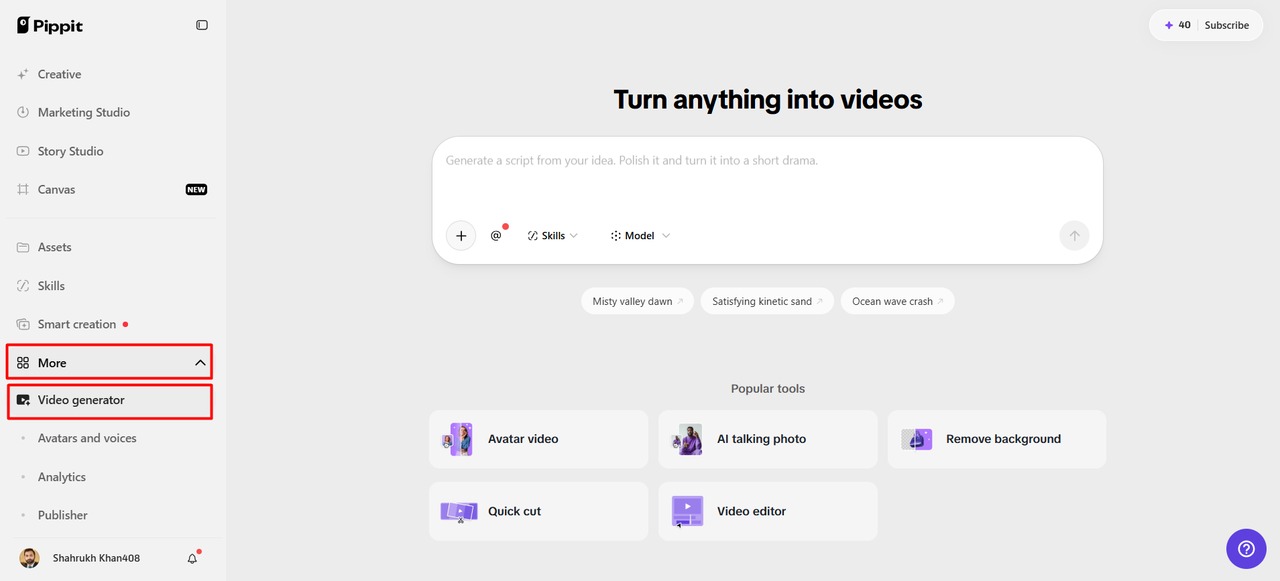
- Log in to Pippit using your Google or social media account before creating streaming backgrounds.
- Open the “Video generator” from the left menu under “More” to begin your background project.
Step 2: Generate a Seamless Streaming Loop
- Choose “Dreamina Seedance 2.5” as your AI model for creating dynamic streaming background loops.
- You can also select “Dreamina Seedance 2.0” for another option when generating atmospheric streaming visuals.
- Try “Dreamina Seedance 2.0 Fast” when selecting another available model for your streaming background.
- Select “Dreamina Seedance 2.0 Mini” as another model option for creating your looping visuals.
- You can also choose “Dreamina Seedance 1.0” when selecting your preferred video generation model.
- Alternatively, select “Auto Route”, which smartly routes across video generation modes for better overall value.
- Enter a detailed prompt describing looping motion, lighting, colors, atmosphere, composition, and seamless transitions.
- Click “+” to upload reference images or videos from your device, phone, Dropbox, or link.
- Select assets when you do not have reference media available for your streaming background.
- Choose an aspect ratio under “Ratio” and select the desired quality through “Resolution”.
- Use “@” to tag media or photos inside your prompt for accurate visual referencing.
- Confirm your settings, then click “Generate” to create your looping stream background.
Step 3: Refine and Export Your Stream Background
- Preview your background to check movement, transitions, lighting, composition, and seamless looping consistency.
- Click “Regenerate” when the generated result needs another attempt or improved visual continuity.
- Click “Edit more” to refine your background using Pippit’s available AI editing tools.
- Customize captions manually, add text, and adjust size, color, alignment, filters, and effects.
- Add background music, remove backgrounds, and fine-tune visuals to match your streaming environment.
- Click “Download” to export your finished streaming background directly onto your local device.
- Click “Publish” to schedule and share your background across connected social media channels.
Design Motion That Can Run Behind a Live Stream
In most cases, slow environmental movement works well as it keeps activity going without requiring attention. Limit camera movement, particularly when following fast-moving foreground material. Avoid placing major activities such as visual activity in the webcam frame, alert panel, chat box, and important text. Match the intensity of movement to the personality of the stream and purpose of the scene. Lower-level animation is appropriate for focused commentary; higher-level animation is appropriate for waiting scenes. Don’t repeat dramatic action since too many zooms and choppy transitions can lead to viewer fatigue.
Create Different Stream Background Zones with Purpose
If a scene is a beginning scene, then stronger movement can be used since the background has a higher visual responsibility. Gameplay backgrounds should minimise movement and maintain negative space around key interface components. Intermission screens may provide some moderate animation with space for schedules, messages or updates. Around conversation spaces, the chat areas should be kept simple so that the messages are visually prominent. Pippit can be used to help carry out a common theme among these scene requirements.
Make Loops Feel Seamless and Less Repetitive
A good loop needs to move and be able to return to its starting position in a convincing manner. Carefully design cyclical elements, in particular the particles, light pulses, clouds, reflections, and screens. Try not to make major movements of objects that move permanently across the frame. The loop boundary may be revealed at once if irreversible scene changes occur. Regenerate the clip or adapt editing controls if movement is suddenly different. Pippit’s editing workflow can accommodate pacing and visual refinements prior to export. But motion continuity can differ between each generation, so AI footage might need to be iterated.
Prepare Stream Backgrounds for Practical On-Screen Use
The aspect ratio should be the same as the layout; otherwise, important details may be cut off when cropping. Resolution should give adequate clarity without imposing excessive processing requirements. When using contrast, make sure that it is not excessive, as it can overwhelm text and overlays if the background is too bright. Leave room for schedules, usernames, calls-to-action, or status messages. The level of motion should be in keeping with the purpose of the scene and not be uncomfortable for the viewer during prolonged viewing. Pippit offers text, effects, filters, music, and other visual features and editing options.
Conclusion
Useful looping visuals are generated by seamless motion, negative space, controlled pacing, and thematic consistency. This AI generation can speed up the process of experimentation in terms of environment, mood, layout, and visual identity. However, careful review is still important, as the footage generated may require regeneration before it can be played continuously without feeling unnatural. The best outcome is when the atmosphere is created without being the main attraction to watch.

Related Posts



 Please like our official facebook page to receive the updates on latest jobs of Government and Private sectors.
Jobs
Pages- 15.5m
Visits - 74.3k
Registered Users


